Word of the Year 2025: Slop & What That Means For Marketing
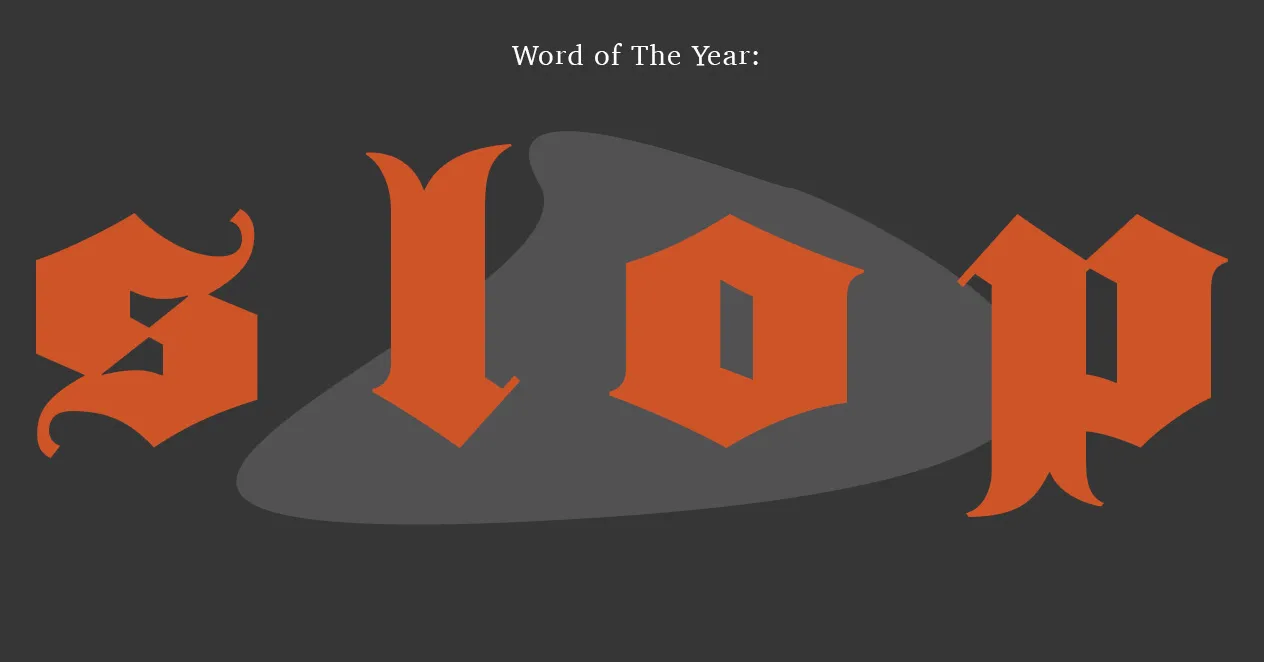
Slop may have been named the word of the year in 2025, but it matters more now than ever.
I love year-end wrap-ups.
Not the corporatified slew of Spotify Wrapped-styled recaps of just how much you used that app you’ve been meaning to kick, but thinking about what you did in a year, finding trends, ranking, and refining the year into a single thing.
The GOTYs, the BOTYs, the AOTYs, the MOTYs, the things that will forever remind you of that year.
I love making these for myself, but I especially love looking through everyone else's. You get little glimpses into what their year looked like and who they are. It’s nice.
The OTYs are also indicators of the year from a cultural perspective. Yes, Anora got Best Picture of the Year in 2025, but if we’re building a list of movies from that year that were important, it’s Minecraft.
WOTY, or word of the year, is a somewhat new one for me. If you don’t know, every year, online dictionaries and publications that care about words choose a word to name the word of the year. It’s really all in the title.
In 2023, the American Dialect Society gave this most prestigious award to Enshittification, which I wrote about here. In 2024, they chose the word Rawdog, which I did not write about for obvious reasons. However, I am back and happy to share (over half a year late) that the word of the year 2025 is slop.
I’ve been reading about the black plague.
Sorry, not about it, but reading a book that takes place during that time. It’s a brutal, grim dark story about a disgraced knight leading a young girl to Paris. The book is Between Two Fires, and while it has fantasy elements, most of the world is pretty grounded and gross. And because the world is pretty grounded and gross, they talk a lot about slop buckets.
Instead of a toilet, a bucket. Instead of a drain, a window.
It was a rough time. Sanitation was out the window, and the streets were covered in more than just plague. Not a place you want to be.
Fast forward to 2026, and we now have flushable toilets. The streets are no longer littered with slop, but the internet sure is.
What is Slop?
In their post about choosing the word slop, the American Dialect Society mentions that the AI in slop is implicit, but the word can also stand on its own. If you say “this is slop”, it’s known that you’re talking about the “low-quality, high-quantity content, most typically produced by generative AI.”
I’ve done all that I can to remove short-form content from my life, and I think you should consider doing the same. However, before I made that jump, my algorithm was flooded with videos of fake people doing fake things, which added no value to my time looking at my phone. And I think it’s safe to say you’ve also encountered similar content.
Slop is also a pejorative suffix. Slap that thang on the back of any word, and you’ve got yourself something.
-
Punkslop
-
SEOslop
-
Fantasyslop
-
Coffee Gearslop
-
Bookslop
-
Nostalgiaslop
-
Popslop
-
Hopslop
-
Foxslop
However, in this context it’s not always bad. Friendslop is now a recognized subgenre of games (made without AI) that people actually enjoy. The slop part of this is more so about the volume of games coming out in this genre and the fact it’s not a very novel concept. It’s something familiar that didn’t take that much effort. Sometimes people love being a nasty little piggy and enjoying some slop.
For the most part, when people refer to slop, they mean low-quality, high-quantity content that is AI-generated.
The Information Issue With Slop
At best, AI Slop gets a chuckle. At worst, it misinforms and degrades critical thinking. I’m going to call out my mom here for a second (sorry, Mom).
I’m sitting at the dining table at my parents’ house on a lazy Saturday. She starts talking about this phenomenon of “walking lightning”. According to her description, it’s when a ball of lightning moves through an environment and just kind of zaps things.
I’m sceptical at first, but then she shows me video evidence. I debunk it as AI: inconsistencies in the backgrounds, and she responded with “this is AI, but it does happen.”
It doesn’t, but even if it does, it’s a fake video.
This issue hit national news when videos were being shared of the Hollywood sign burning down during the 2025 Los Angeles fires. The Hollywood sign was not affected by the fires. And while that was likely the first time people saw the potential dangers of AI Slop, that didn’t stop the slop from flooding algorithms.
The Content Marketer’s Issue With Slop
We work in content marketing; not sure if you knew that, but now you do.
This arena of digital marketing has been relentlessly changing the last few years. From AI content mills producing billions of low-value pages to Google all but saying they want people to get all their information from the AI summary and not leave Google, It’s been a weird time.
Slop is only one of the areas of change that a content marketer should understand if they want to be successful. So here are some issues a content marketer needs to understand about the 2025 word of the year:
“Ma, get the plunger!”
Content marketers rely on various channels to deliver their content.
-
Email
-
Youtube
-
Search
-
Social Media
-
Short for content
Each of these funnels is, traditionally, how we deliver touchpoints from our brands to their audience. However, what used to be a stream of content turned into a river, turned into white water, turned into a torrent of sludge.
AI Slop has clogged these channels, so getting heard, seen, or read is incredibly difficult using traditional methods.
Trust Issues
32% of consumers trust brands less if their content is AI-generated.
This comes from YouGov and Meltwater’s Trust in the Age of Generative AI report.
32% doesn’t seem that big, but this was 0% in 2021.
You might think this can be avoided by just not using AI, but that won’t stop consumers from auditing every nook and cranny, trying to find that one clue that “yes, this is AI”. Personally, I have a very high AI-dar, and I can’t help myself from using it whenever I can.
Because of this trust issue, brands need to work extra hard to ensure their consumers can trust them while simultaneously being a natural fit for them.
As a rule, Eightfold immediately advises against any AI-generated content. Who needs a quick turnaround if the content erodes the trust you’re trying to build?
Ditch the Slop. Start Building.
As far as I’m concerned, and some people at Eightfold may disagree with me on this, efficiency, scalability, and any corporate buzzword that has been used to justify generative AI can take a back seat.
Nothing beats actually building something.
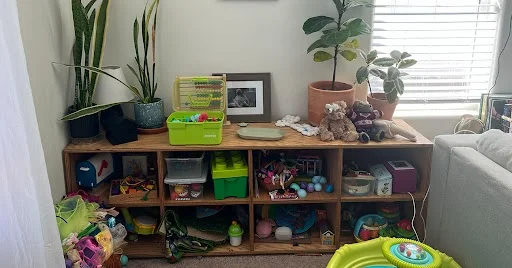
Before our first daughter was born, I wanted to make something we could actually use. Something that fit in our space and wasn’t prefabricated to fill the average. I made the measurements, got the wood, and built some basic box shelves that don’t fit average-sized baskets.
It fit in our apartment perfectly and became our cat’s daybed. Now, it sits in our home, still doing exactly what I made it to be. Just some shelves that hold our daughter's toys.
I don’t care that the size of the shelves hinders the use of readily available baskets, because the cost of that mistake bought me the learning experience of knowing what to do next time.
When it comes to building by hand, the cost of messing up is getting better.
When it comes to generating with AI, the cost of messing up is brand trust and creative atrophy.
Don’t let your brand join the slew of content slop that’s pushing people off platforms and making them question their sense of reality.
Get real. Get to work.
And let’s be honest for a second. It’s kind of pathetic to generate content.
Just make it yourself.
*The views and opinions expressed by employees, contributors, authors, or guests are their own and do not necessarily reflect the official policy, position, or opinions of Eightfold Technologies.
